
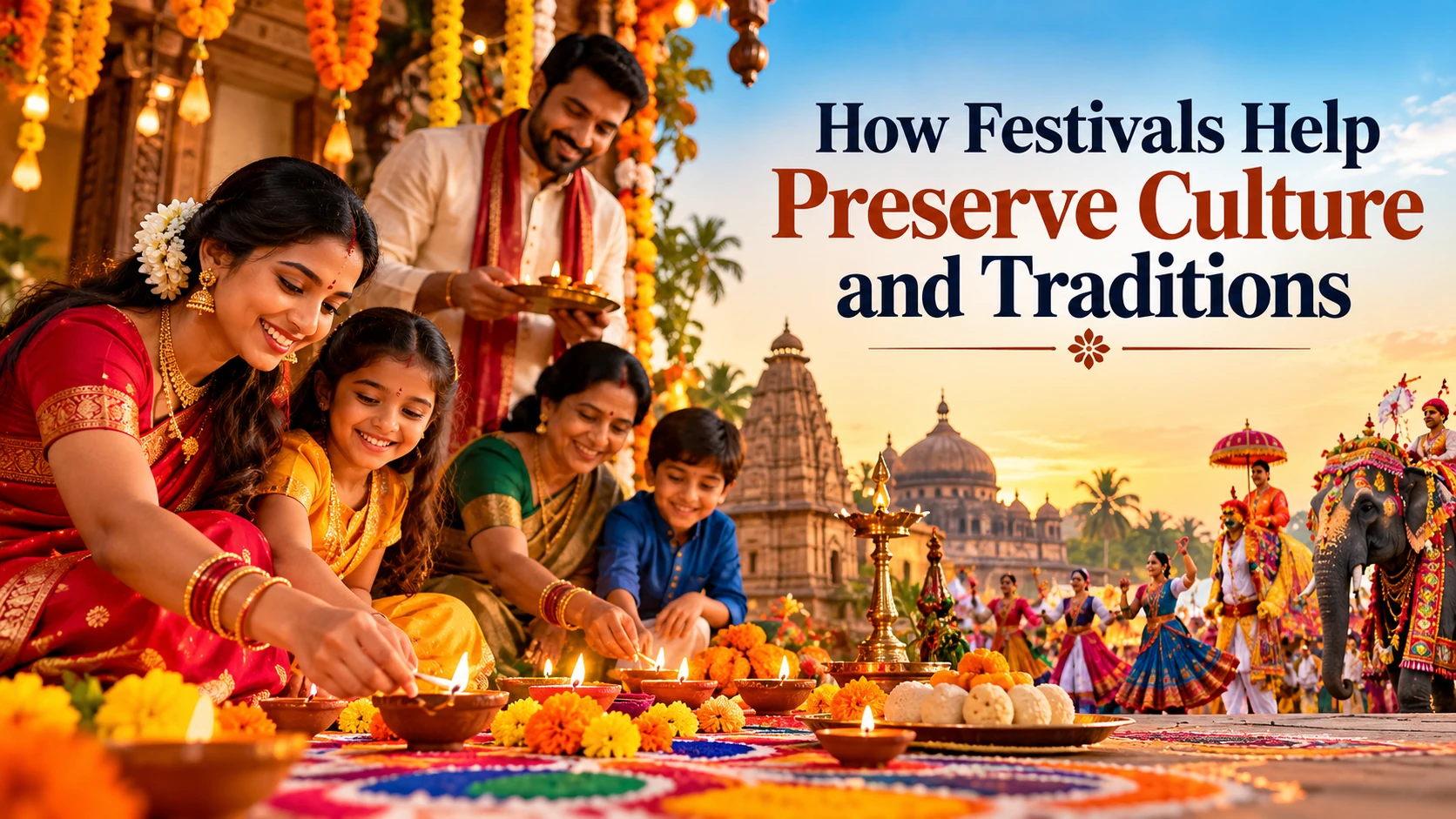
Festivals are an important part of cultural life in communities around the world. They bring people together through celebrations, food, music, religious practices, traditional clothing, storytelling, dance, and community activities. While festivals can provide entertainment and social connection, they also play an important role in preserving cultural identity.
Keeping Traditional Customs Alive
Many customs are preserved because they continue to be practiced during festivals. People may follow traditional ceremonies, prepare specific foods, decorate homes, wear particular clothing, or participate in community rituals.
These activities give younger generations an opportunity to experience traditions rather than learning about them only through books or photographs.
When customs are repeated regularly, they remain an active part of community life.
Passing Traditions to Younger Generations
Children and young adults are important to the long-term preservation of culture. Festivals create opportunities for older generations to teach younger family members about traditional practices.
Grandparents and parents may explain the meaning behind particular ceremonies, songs, recipes, stories, or symbols. Young people can participate directly by helping prepare food, decorating spaces, performing dances, or learning traditional crafts.
This practical involvement can make cultural education more meaningful.
Preserving Traditional Food
Food is one of the most recognizable elements of many festivals. Special recipes may be prepared only during particular celebrations or seasons.
Traditional cooking techniques and ingredients can be passed through families and communities. Preparing these foods together also creates opportunities for people to share memories and stories.
Festivals can therefore help maintain culinary traditions that might otherwise become less common.
Supporting Traditional Music and Dance
Music and dance are often central to cultural celebrations. Traditional songs, instruments, performances, and dances can communicate stories and values that have been preserved for generations.
Festivals provide public spaces where performers can demonstrate these traditions and younger participants can learn them.
In some communities, festival performances also encourage musicians and dancers to continue developing traditional skills.
Preserving Traditional Clothing and Crafts
Festivals can provide opportunities for people to wear traditional clothing and display handmade crafts. Embroidery, weaving, pottery, jewelry, painting, woodwork, and other crafts may become part of cultural celebrations.
When there is continued interest in these products, artisans may have greater opportunities to teach their skills and continue producing traditional work.
Sharing Stories and History
Cultural traditions are often connected to stories about historical events, important figures, local communities, or religious beliefs.
Festivals provide opportunities to retell these stories through performances, songs, speeches, decorations, and ceremonies.
Storytelling helps communities maintain connections with their past while allowing younger generations to understand why certain traditions remain important.
Strengthening Community Connections
Festivals bring people together. Family members who live in different places may return home for important celebrations, while neighbors and community groups work together to organize events.
Preparing decorations, food, performances, and public activities requires cooperation.
These shared responsibilities can strengthen relationships and create a sense of belonging.
Creating Opportunities for Cultural Education
Festivals can also educate people who are unfamiliar with a particular culture. Visitors may attend public celebrations and learn about local customs, foods, music, clothing, and history.
This exchange can encourage greater understanding between different communities.
However, cultural traditions should be presented respectfully rather than reduced to simple entertainment.
Adapting Traditions Over Time
Cultural preservation does not necessarily mean keeping every practice exactly the same forever. Traditions naturally change as societies develop.
Modern technology, changing lifestyles, migration, and new forms of communication can influence how festivals are celebrated. Communities may introduce new activities while maintaining important traditional elements.
This ability to adapt can help festivals remain relevant to younger generations.
Festivals Can Support Local Artisans
Many celebrations create demand for locally made decorations, clothing, food, musical instruments, artwork, and handicrafts.
Purchasing these products can provide economic support for artisans and small businesses. In turn, continued demand may encourage traditional skills to remain active within the community.
The Role of Technology
Technology has created new ways to document and share festivals. People can record performances, photograph traditional clothing, preserve recipes, and create digital archives.
Social media can also introduce cultural celebrations to audiences outside the local community. This can increase awareness while creating opportunities for younger generations to participate in documenting their heritage.
Balancing Preservation and Modern Life
Festivals can face challenges when traditions become less familiar to younger generations or when commercialization changes the nature of celebrations.
Communities can address these challenges by encouraging participation, teaching the meaning behind traditions, supporting local performers and artisans, and creating opportunities for different generations to work together.
A Living Connection to Heritage
Festivals help preserve culture because they make traditions part of everyday community experiences. They bring together food, music, stories, clothing, crafts, ceremonies, and social relationships in ways that people can actively experience.
Rather than treating culture as something that exists only in museums or historical records, festivals allow communities to practice and share their heritage. When generations participate together, traditions can continue evolving while retaining their connection to the past. In this way, festivals serve as living expressions of cultural identity and help ensure that important customs and stories remain meaningful for future generations.