
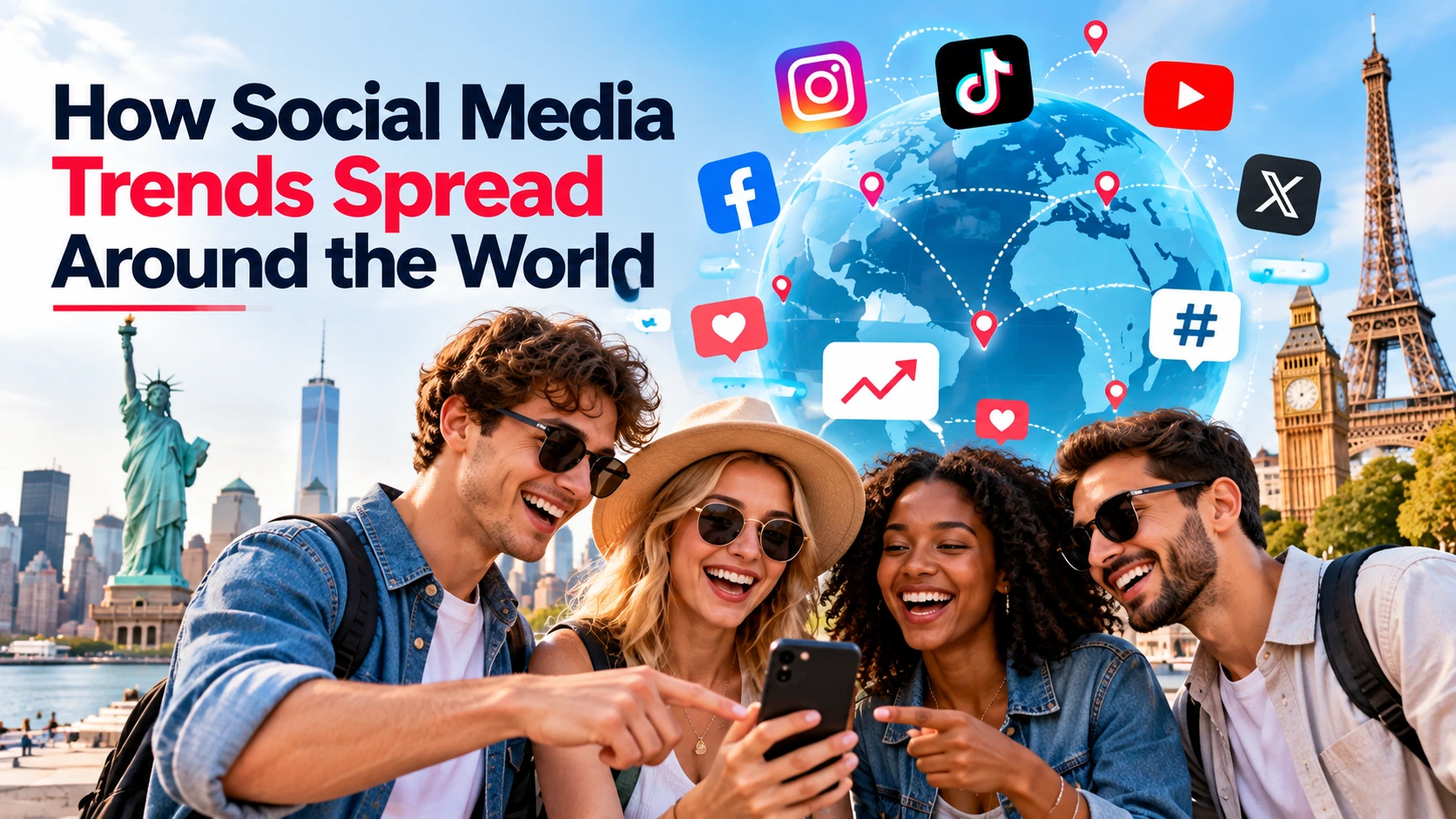
Social media has changed the speed at which ideas, challenges, memes, fashion styles, music, and cultural conversations travel across borders. A trend that begins with one creator or a small online community can reach millions of people in different countries within hours or days. Platforms allow users to discover content from distant places, recreate it, add their own interpretation, and share it with their networks.
A Trend Can Start Almost Anywhere
Social media has reduced the importance of geographical boundaries when it comes to content discovery. A funny video posted by a small creator can be shared by viewers, picked up by larger accounts, and eventually reach audiences in other countries.
Trends can begin with music, jokes, recipes, fashion, dance routines, visual effects, news-related discussions, or creative challenges. There is no single formula for becoming popular.
Sometimes a trend grows gradually within a specific community. In other cases, a piece of content can receive enormous attention in a very short period.
Algorithms Help Users Discover New Content
Social media platforms use recommendation systems to determine which posts, videos, or accounts users may find interesting. These systems can expose people to content created by individuals they do not already follow.
When users watch, like, comment on, or share particular types of content, recommendation systems may show them similar material.
This can create a cycle in which more people discover a trend, interact with it, and contribute to its further distribution.
Music Often Travels Faster Than Words
Music is one of the strongest drivers of global social media trends. A song can become associated with a dance, video format, meme, or particular style of storytelling.
Users in different countries may use the same audio track while creating completely different content based on their own languages and cultures.
As a result, music can become a common element connecting audiences who otherwise have little direct interaction.
Creators Adapt Trends to Local Cultures
Global trends rarely remain exactly the same everywhere. People often modify them to fit their own culture, language, humor, fashion, or traditions.
For example, an international video format may be recreated with local expressions or regional references. A popular recipe may be changed using locally available ingredients.
This process allows a trend to remain recognizable while becoming relevant to a new audience.
Hashtags Make Trends Easier to Find
Hashtags have traditionally played an important role in organizing social media conversations. When many users attach the same hashtag to their posts, it becomes easier for others to find related content.
Hashtags can help connect individual posts to larger conversations around entertainment, sports, fashion, travel, food, or social events.
Although platforms differ in how hashtags influence discovery, searchable topics remain an important part of online culture.
Influencers Can Accelerate Global Reach
Creators with large audiences can introduce trends to millions of followers. When multiple creators participate in the same format, a trend can spread rapidly.
However, large influencers are not always responsible for starting trends. Smaller creators and niche communities frequently develop ideas that later attract wider attention.
The relationship between creators and audiences is therefore important to understanding how trends evolve.
People Like Participating in Shared Experiences
Social media trends spread partly because participation gives people a sense of belonging. When users recognize a popular joke, song, challenge, or format, they can participate in a shared online experience.
Creating a version of a trend allows users to feel connected to a larger community while still expressing their individual personality.
This combination of familiarity and personal creativity can make trends highly engaging.
Language Does Not Always Stop a Trend
Visual content can cross language barriers relatively easily. A dance, facial expression, recipe, fashion style, or visual joke may be understandable even when viewers do not speak the creator’s language.
Automatic captions, translation tools, subtitles, and multilingual creators have also made international content easier to access.
As communication technology improves, content can travel between language communities more easily.
Trends Can Influence Offline Culture
Social media trends do not always remain online. They can influence clothing choices, food preferences, entertainment, travel destinations, beauty styles, and consumer behavior.
A trend may begin as a short video but eventually appear in advertisements, television programs, stores, events, or everyday conversations.
This shows how digital culture and physical culture increasingly interact.
Trends Can Change Very Quickly
One distinctive feature of social media is the speed of cultural change. A trend can become extremely popular and then disappear as users move on to something new.
This creates pressure for creators and brands to respond quickly. At the same time, rapidly changing trends can make it difficult to distinguish long-lasting cultural movements from temporary online popularity.
The Role of Responsible Participation
Not every trend is harmless or appropriate. Some challenges can encourage unsafe behavior, while misleading information can spread alongside entertainment content.
Users should consider the source of information before sharing it, particularly when a trend involves health, safety, financial claims, or sensitive events.
A Connected Digital Culture
Social media has created an environment where cultural ideas can travel between countries at remarkable speed. A trend can begin locally, gain attention internationally, and then return in a completely different form after being adapted by users around the world.
Ultimately, social media trends spread because technology makes discovery and sharing easy, while human curiosity, creativity, participation, and the desire for connection encourage people to join in. The result is a constantly changing global digital culture in which local ideas can become international phenomena and international trends can acquire distinctly local identities.