
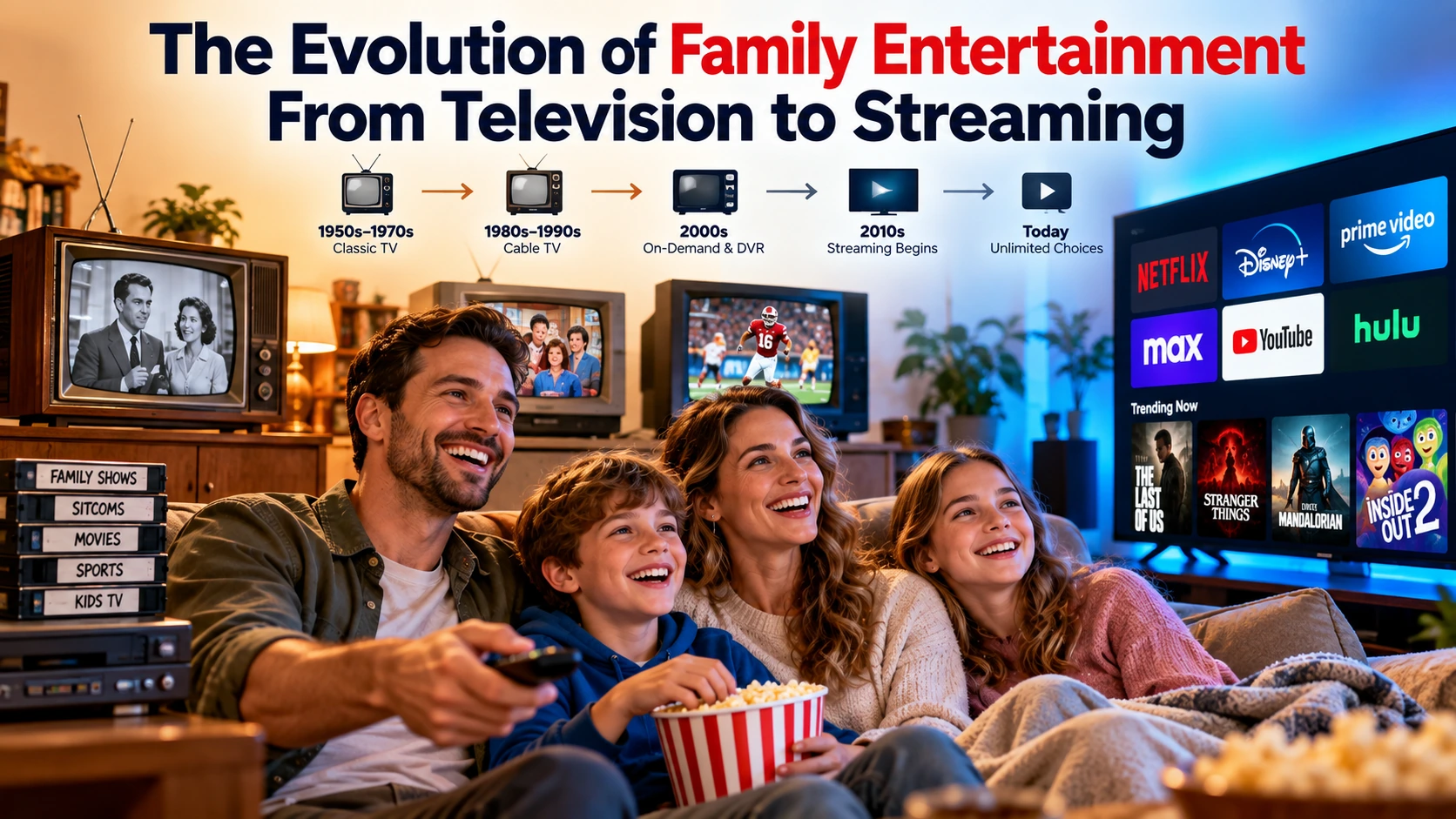
Family entertainment has changed significantly over the past several decades. Television once served as the central source of entertainment for many households, with families gathering around a shared screen to watch scheduled programs. Today, streaming platforms, smart televisions, smartphones, tablets, and on-demand services have transformed how families discover and enjoy movies and shows.
The Era of Scheduled Television
For many years, television programs were available according to fixed schedules. Families had to be in front of the television at a particular time if they wanted to watch a favorite program.
This created shared viewing routines. Certain evenings might be reserved for family shows, weekend movies, or children’s programs.
Television was not simply a source of entertainment. It often became a central part of household routines and conversations.
The Rise of Cable Television
Cable television expanded the number of channels available to families. Instead of having only a few options, viewers could choose from dedicated channels featuring cartoons, movies, sports, documentaries, educational programs, and other forms of entertainment.
This increased variety allowed different members of a family to find programs that matched their interests.
However, viewers still generally depended on broadcast schedules.
Home Video Changed Viewing Habits
The introduction of technologies such as videocassettes and later DVDs gave families greater control over what they watched and when they watched it.
Parents could purchase or rent movies for children to watch repeatedly. Families no longer had to depend entirely on television schedules.
Home video also made it easier for households to build personal collections of favorite movies and programs.
The Arrival of Digital Media
Digital technology further changed family entertainment. Downloaded content and digital video made movies and television programs easier to store and access.
Computers and later smartphones and tablets expanded the number of devices on which entertainment could be consumed.
This meant family entertainment was no longer limited to the television in the living room.
Streaming Introduced On-Demand Viewing
Streaming services brought another major change by allowing viewers to select programs whenever they wanted. Instead of waiting for a particular show to appear on television, families could search for movies and series and start watching almost immediately.
This flexibility became especially useful for households with different schedules.
Families could watch a program together when convenient or choose separate content based on individual interests.
Children Have More Entertainment Choices
Streaming has significantly expanded children’s entertainment options. Animated programs, educational series, family movies, documentaries, and interactive content are available across many services.
Parents can often choose content based on age, interests, or educational value.
At the same time, the large amount of available content means families may need to make deliberate choices rather than simply accepting whatever happens to be on television.
Family Viewing Is Becoming More Flexible
Traditional family viewing often meant everyone watched the same program at the same time. Streaming has made family entertainment more flexible.
A family might still watch a movie together on a large television, but individual members can also watch different programs on separate devices.
This creates both opportunities and challenges. Families have more freedom, but shared viewing requires intentional choices.
The Importance of Co-Viewing
Even with individual devices, watching entertainment together remains valuable for many families. A shared movie or television series can create opportunities for conversation and connection.
Parents can discuss characters, themes, humor, or important lessons with children. These conversations can turn entertainment into a shared family experience rather than simply screen time.
Recommendations Influence What Families Watch
Streaming services commonly use recommendation systems to suggest content based on previous viewing. These systems can make it easier to discover movies and programs that match household interests.
However, recommendations can also narrow the range of content people encounter if they repeatedly choose similar programs.
Families can explore different genres and subjects to maintain variety.
Interactive and New Forms of Entertainment
Modern digital entertainment increasingly includes interactive experiences. Some programs allow viewers to influence aspects of a story, while games and online experiences can involve multiple family members.
Virtual reality, augmented reality, interactive storytelling, and other technologies may continue to expand the definition of family entertainment.
Entertainment Beyond the Living Room
Family entertainment is now possible almost anywhere. During a trip, children may watch a downloaded movie on a tablet. Families can stream a program while staying in a hotel or watch content together on a laptop.
This portability has made entertainment less dependent on location.
The Future of Family Entertainment
The evolution from television to streaming reflects a broader shift from scheduled entertainment to personalized, on-demand experiences. Families now have access to an enormous variety of content and can decide when, where, and how they want to watch it.
Despite these technological changes, one element remains important: shared experiences. Whether a family gathers around an old television, watches a movie through a streaming service, or enjoys an interactive digital experience together, entertainment can still provide opportunities for conversation, laughter, and connection.
The technology has changed, but the basic desire to enjoy stories and experiences together continues to shape family entertainment.