
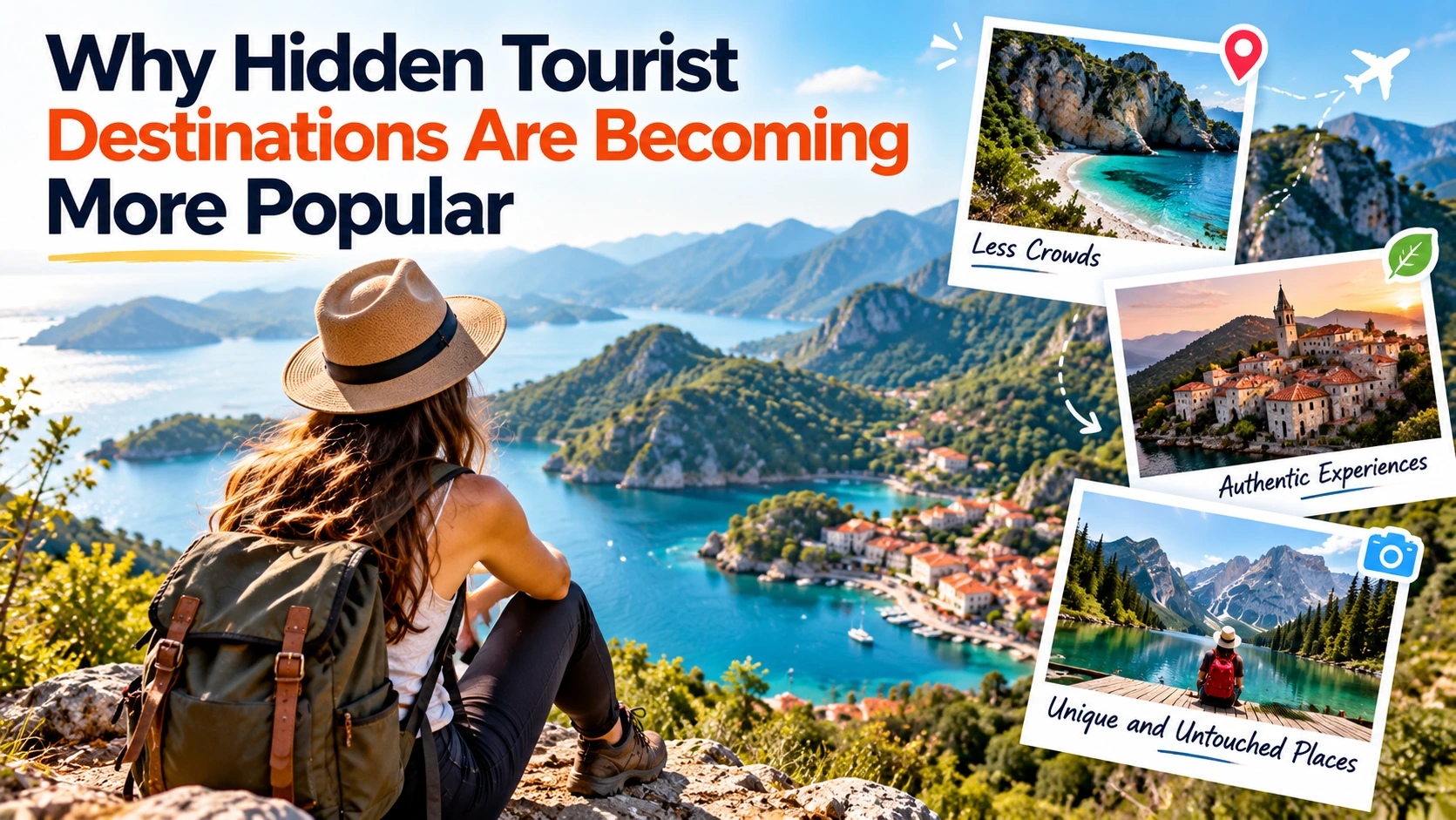
Travelers have traditionally been drawn to famous landmarks, major cities, iconic beaches, and well-known attractions. However, an increasing number of travelers are also interested in places that receive less attention. These hidden tourist destinations may include quiet villages, lesser-known natural landscapes, small historic towns, remote beaches, local markets, and unusual cultural attractions.
A Desire to Escape Crowds
One of the biggest attractions of lesser-known destinations is the possibility of avoiding large crowds. Popular tourist sites can become extremely busy during peak seasons.
Some travelers prefer destinations where they can explore at a slower pace. A quiet historic street, peaceful mountain village, or less-visited natural area can provide a different travel experience from a crowded attraction.
For people looking for relaxation, fewer visitors can make it easier to enjoy the surroundings.
Social Media Is Revealing New Places
Social media has dramatically changed how travelers discover destinations. A photograph or short video of an unfamiliar location can introduce thousands of people to a place they had never heard about.
Travel creators often share lesser-known viewpoints, restaurants, walking routes, cultural experiences, and natural attractions.
As a result, destinations that were once known primarily by local residents can gain international attention.
Travelers Want More Authentic Experiences
Modern travelers often look for experiences that feel connected to local life. Instead of visiting only major attractions, they may want to explore neighborhood markets, eat traditional food, meet local artisans, or participate in community activities.
Smaller destinations can offer more opportunities for these experiences because tourism may be less standardized.
Visitors may encounter local traditions and everyday activities that are not as visible in heavily developed tourist areas.
The Search for Unique Travel Memories
Many travelers want experiences that feel personal and distinctive. Visiting a famous landmark can be memorable, but discovering an unusual destination can create a different type of travel story.
A hidden waterfall, historic village, quiet lake, unusual museum, or remote hiking trail may become a special memory precisely because it feels different from the standard tourist itinerary.
Technology Makes Exploration Easier
Navigation applications, digital maps, travel blogs, online reviews, translation tools, and travel communities have made it easier to explore unfamiliar destinations.
Travelers can research transportation, accommodation, local attractions, restaurants, and walking routes before arriving.
This access to information has reduced some of the uncertainty associated with visiting lesser-known places.
Smaller Destinations Can Offer Cultural Experiences
Hidden destinations are often connected to local traditions, crafts, food, architecture, and history.
A small town may have a traditional festival that is not widely known internationally. A rural area may have unique agricultural practices or regional cuisine.
For culturally curious travelers, these places can offer opportunities to learn about traditions that may receive less attention than major tourist attractions.
Travelers Are Looking Beyond Standard Itineraries
Travel planning has become increasingly flexible. Instead of following a fixed list of famous attractions, travelers can create itineraries based on personal interests.
Someone interested in photography may search for unusual landscapes. A history enthusiast may choose a small historic town. A food lover may visit a region known for a particular cuisine.
This personalized approach naturally leads travelers toward less-famous destinations.
Economic Opportunities for Local Communities
The growing interest in hidden destinations can create opportunities for smaller communities. Visitors may spend money on locally owned accommodations, restaurants, transportation, guided tours, handicrafts, and other services.
Tourism can provide additional income and employment when it is managed responsibly.
However, sudden popularity can also create pressure on infrastructure and natural resources. Communities need appropriate planning to manage increased visitor numbers.
The Importance of Responsible Exploration
A destination being described as “hidden” does not mean it should be treated without restrictions. Some locations are environmentally sensitive, privately owned, culturally significant, or difficult to access safely.
Travelers should respect local rules, avoid damaging natural or historical sites, manage waste responsibly, and follow guidance from local authorities.
Responsible tourism helps ensure that increased interest does not harm the places people want to experience.
Hidden Does Not Always Mean Completely Unknown
The term “hidden destination” can be misleading. Many so-called hidden places are well known to local residents or regional travelers.
The idea usually refers to locations that receive less international attention than major tourist attractions.
Recognizing this distinction is important because local communities have their own relationships with these places and should not be treated as simply undiscovered attractions.
A New Style of Exploration
The popularity of lesser-known destinations reflects a broader change in how people think about travel. Many travelers are interested not only in seeing famous sights but also in discovering local culture, enjoying quieter environments, trying regional food, and creating more personal experiences.
Social media and digital travel tools have made these destinations easier to discover, while changing traveler preferences have increased demand for experiences outside conventional tourist routes.
Ultimately, hidden tourist destinations are becoming more popular because they can offer novelty, cultural connection, flexibility, and a break from crowded attractions. As more people seek meaningful and distinctive travel experiences, lesser-known places are gaining attention. The challenge is to explore them responsibly so that tourism supports local communities and preserves the qualities that made these destinations appealing in the first place.